MLBPA Makes Opening Proposals to Benefit All Players and Build Upon Industry Momentum

Updated: May 28

NEW YORK, May 27 -- The Major League Baseball Players Association (MLBPA) today made an initial series of core economic proposals to open collective bargaining negotiations with Major League Baseball. The current Collective Bargaining Agreement expires in December.
“Today, the MLBPA presented a comprehensive set of economic proposals designed to advance the rights and benefits of players at all levels,” Interim Executive Director Bruce Meyer said. “Our goal is to preserve and improve baseball’s market system, rewarding competition on and off the field. Additionally, the players’ proposals provide increased revenue sharing initially guaranteeing every small market Club a minimum of $240m in revenue every season. This enhanced revenue sharing includes added protections to ensure Clubs prioritize winning over profiteering. Ultimately, our proposals are designed to build upon the incredible momentum and popularity of our sport world-wide.”
Among the key components proposed by the MLBPA:
Significant increases to 40-man minimums, including a Major League minimum salary of $1.5m beginning in 2027
Expanded Pre-Arb Performance Bonus Program distributing more dollars to more players
Expansion of salary arbitration eligibility
Enhanced compensation and contract guarantees for players in salary arbitration
Expansion of rules aimed at combating service time manipulation
Elimination of the qualifying offer as well as the penalties for Clubs that sign free agents
Increased benefits for lower revenue Clubs who lose players to free agency
Qualified free agency for players with five or more years of service who have reached age 30
“Luxury Tax” threshold increases and removal of non-monetary penalties
A new “Competitive Integrity Tax” applying to Clubs that fail to meet minimum payroll benchmarks
Expanded draft lottery to further disincentivize tanking
Additional MLBPA Proposals that are designed to improve competition while also supporting lower revenue Clubs include:
Increased revenue sharing that initially guarantees every small market Club a minimum of $240m in revenue every season, subject to requirements that funds be used to compete on the field. Beyond that guarantee:
Clubs will be able to keep more of the stadium-related revenues they generate
Tens of millions in extra revenue sharing will go to low-revenue Clubs that qualify for the playoffs or have a winning record
Significantly increased sharing of local media revenues from high to low revenue teams
Curbing revenue sharing dependence by barring excessive transfers
Penalties for Clubs that neglect to spend revenue sharing payments on team payroll
Draft picks and other benefits for low revenue Clubs active in free agency and other signings
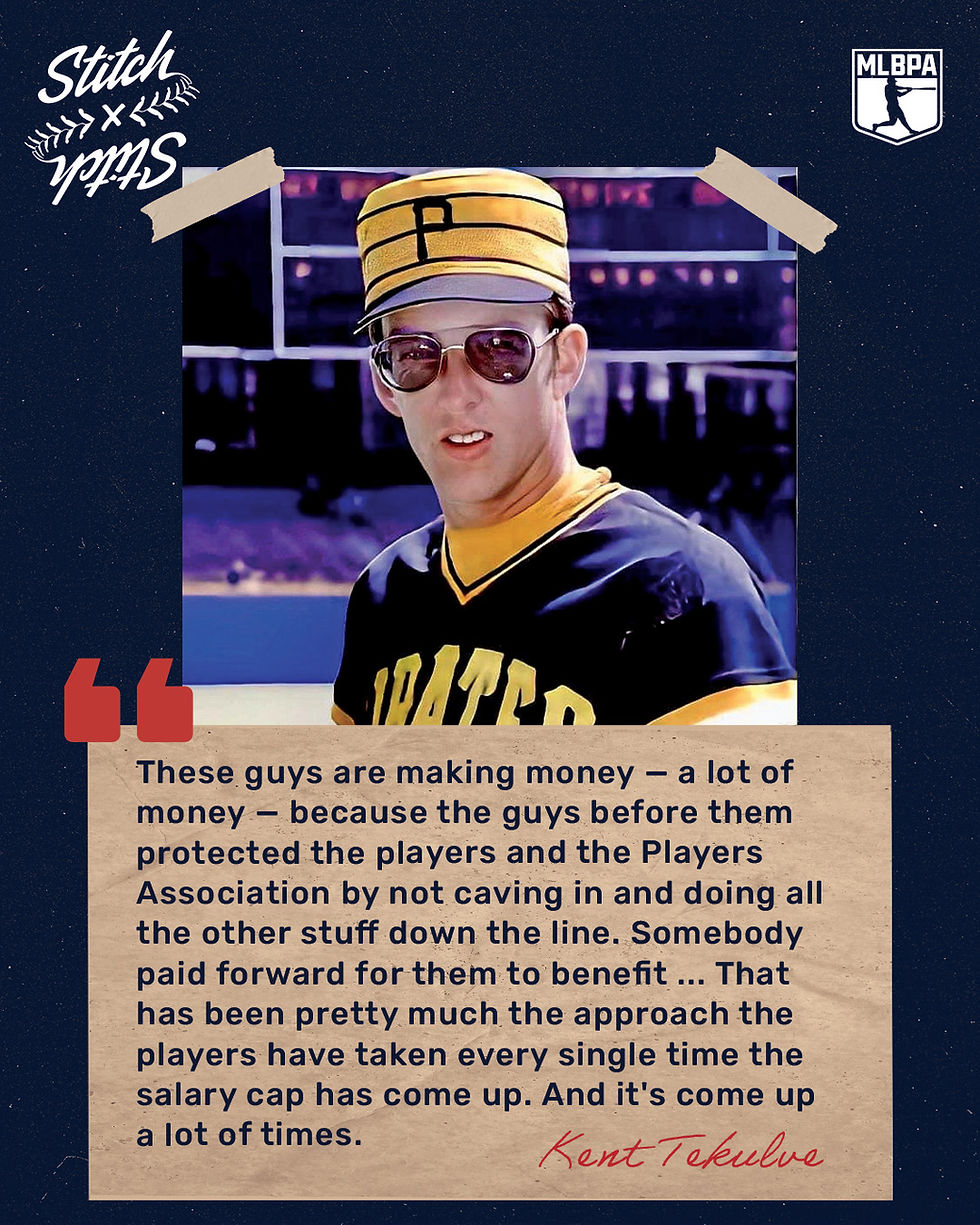
“Players across the league are engaged and involved,” Executive Subcommittee Member Brent Suter said. “We’re committed to leaving our game better for every generation of player that follows us onto the field – just like the players who came before did for us.”
“We all see the momentum in our game,” Executive Subcommittee Member Chris Bassitt said. “Amazing players and incredible fans. Attendance, viewership, interest – by any measure you want to use, our game is moving in a positive direction. We’ve put forward proposals designed to continue that trend. Support, incentivize, and reward Clubs who are committed to competing, especially small market Clubs. Compensate players fairly for the work they are doing. Preserve the rights that generations of players have fought for and grow the game all of us love.”